
What to see in Spain: 9 places that should be on your bucket list

Dreamy beaches, astonishing mountain landscapes, cities that are full of life, and cosy villages that feel like home—Spain’s wonders are endless. But despite the charm of every corner in the country, it is true that some spots are more famous than others, and there is no doubt of the reasons behind their fame.

Exploring Spain is an adventure that should never come to an end, but you can start by visiting some of these must-see places.
Best places to visit in Spain
Sagrada Familia (Barcelona)

18 majestic towers rise among Barcelona’s skyline. It’s the Sagrada Familia, one of the most popular architectural works in Spain and the whole world. Gaudí’s incredible temple is meant to reach a height of more than 172 metres or 565 feet. It is still under construction, but once finished, it will be the tallest church in the world.
This gem combines Art Nouveau, Catalan Modernist, and Gothic styles and sits in the heart of the city. Its intricate façades are true storytellers, illustrating the most important eras of Jesus’ life: Nativity, Passion, and Glory in its stone walls. The impossible shapes of this basilica make it a must-see for everyone who visits Barcelona or the nearby areas.
Alhambra (Granada)

This impressive complex is one of the best things you can see in Spain. The Alhambra, nestled among the mountains, takes us straight to Al-Andalus, Spain’s Islamic era, which lasted from 711 to 1492. The complex includes vibrant gardens and courts, majestic palaces, and a powerful alcazaba or fortress that watches over the city of Granada. Besides, a whole city was created to house the Alhambra’s workers, called the medina, the Arabic word for ‘city’.
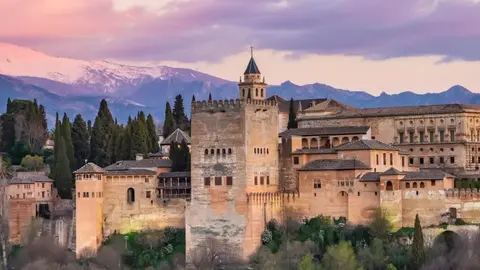
But there is more to the Alhambra than its beauty. Many cultural events are held in the complex, such as poetry and painting workshops, theatrical and musical performances, and art exhibitions. And here is a final tip: do not miss the views of the Albaicín district from the Partal or the panoramic view of the Alhambra from the San Nicolás lookout.
Beach of the Cathedrals (Lugo)

Although its official name is Playa de Aguas Santas or Praia de Augas Santas in Galician, people know this breathtaking natural landscape as the Beach of the Cathedrals thanks to its massive stone arches of carey pattern. They resemble the silhouettes of religious temples, hence the place’s name.
The arches, worn by the ruthless wind and the wild waves of the blue Cantabrian Sea, create an astonishing image that leaves visitors breathless. This fine sand beach is perfect for a relaxing walk thanks to its fine golden sand, but be sure to book a ticket if you’re visiting in the summer months and to check if the tides are low enough—otherwise, you won’t be able to see the ‘cathedrals’!
Santiago de Compostela Cathedral (A Coruña)

This cathedral was built in the spot where the tomb of the apostle Saint James was found in the 9th century. At least, that is what the legend says! Since then, the impressive temple has attracted millions of pilgrims every year, who walk the different Saint James Way or Camino de Santiago routes in order to reach it.
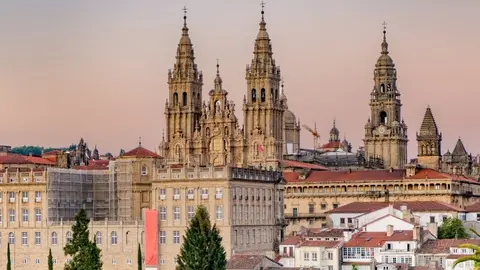
The well-preserved Pórtico de la Gloria welcomes visitors to this harmonious combination of Romanesque, Gothic, and Baroque features. Many surprises await behind its doors, such as some intricate tapestries and the emblematic and heavy botafumeiro. Walk around the whole building to enjoy another breathtaking view: its fabulous sillar façades.
Royal Monastery of San Lorenzo de El Escorial (Community of Madrid)

For a very long time, this breathtaking monastery was known as the Eighth Wonder of the World. Built between the years 1563 and 1584, the Renaissance complex was created in commemoration of the Battle of Saint Quentin (or San Quintín in Spanish) by order of Philip II of Spain.
To walk around its courtyards is to travel to past times, hearing the echoes of royal feuds and the horrors of wars. Once inside its buildings, one can find the tombs of many kings and queens who rest in the Pantheon of the Kings and wonderful art pieces in the art gallery. It is perfect for a short trip since most visits to the monastery take about two hours.
Aqueduct of Segovia

Near the Monastery of San Lorenzo de El Escorial, you will find the aqueduct of Segovia, the perfect ending to a lovely excursion. The incredibly well-preserved Roman aqueduct—although most Segovians agree that it was actually built by the devil—was created to carry the Frío River’s water to the city around the 1st or 2nd century AD.
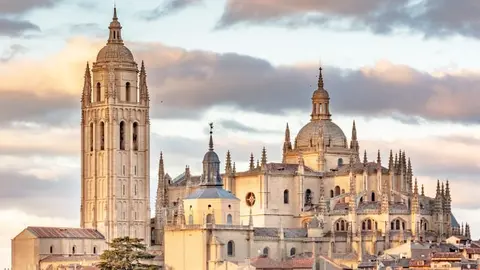
The 15-kilometre-long aqueduct has 167 arches made of around 24,000 granite stones. And although its size and age are surprising, what really astounds is the fact that it wasn’t built with mortar: the stones create a perfect balance. An impressive engineering work!
Teide National Park (Canary Islands)

This arid mountain landscape could belong to another planet, but it can actually be found on the Canary island of Tenerife. The particular, wild beauty of the area is enough of a reason to visit this corner, but its true magic lies on the volcano it shares its name with, the Teide.
This active volcano rises 7,500 metres (or 24,606 feet) above the ocean floor, which makes it the highest peak in Spain and the third in the world. Surrounded by inspiring legends that have been passed down through generations, it is a spot every nature lover should visit.
Lakes of Covadonga (Asturias)

A whole natural treasure awaits those who dare to explore the heart of the Asturian area of the Picos de Europa National Park: Lake Enol and Lake Ercina. The pure air and the echoes of nature fill this space of unbeatable grandiosity.
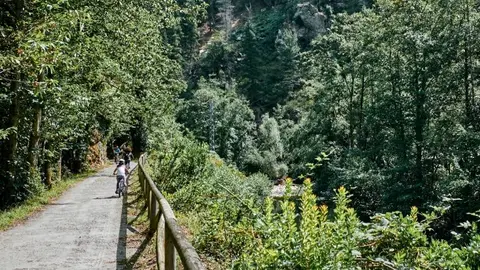
If you are looking for an unforgettable visit, you should visit the nearby sanctuary of the Santa Cueva de Covadonga and the basilica. The former hides among the rocks, avoiding stranger looks, and the second, a Romanesque wonder brought back to life after a terrible fire, catches the attention of every passerby. They might be total opposites, but both of them should be seen once in a lifetime.
Mosque-Cathedral of Córdoba

Andalusia’s Islamic heritage is well known, and most people can think of different examples of its singular architecture. The Mosque-Cathedral of Córdoba and its elegant arches are one of the most representative. And it is no wonder why, because the intricate geometric patterns of its walls trap us, making it impossible to take the eyes off of them.
But the Mosque-Cathedral should be experienced with other senses besides sight. Close your eyes and inhale the scent of its charming Orange Tree Courtyard. Feel the murmur of the voices that have filled its rooms throughout the years. Explore every inch of this magical building, a must-see if you’re visiting Córdoba and a treasure you will never forget.
Follow us on Facebook!