
Guide to Gaudí's best works

Antoni Gaudí is one of the most renowned architects of all times, not only in Spain but in the whole world. Actually, he is considered the greatest exponent of Catalan Modernism, since most of his famous works were born in this autonomous community. But that is not the case for all of them! This article will take you through the works Gaudí built throughout Spain, from the ones you can find in Barcelona to the ones that were built far from this city.

Gaudí’s works in Barcelona
Gaudí had an innate sense of geometry and volume. Besides, he designed his buildings caring both for structure and decor. His desire to innovate while maintaining tradition is evident in each of his works, whose nature elements stand out too. These are the works Gaudí left behind throughout the province of Barcelona, where his name echoes in every street.
The Sagrada Familia, Gaudí’s most renowned work
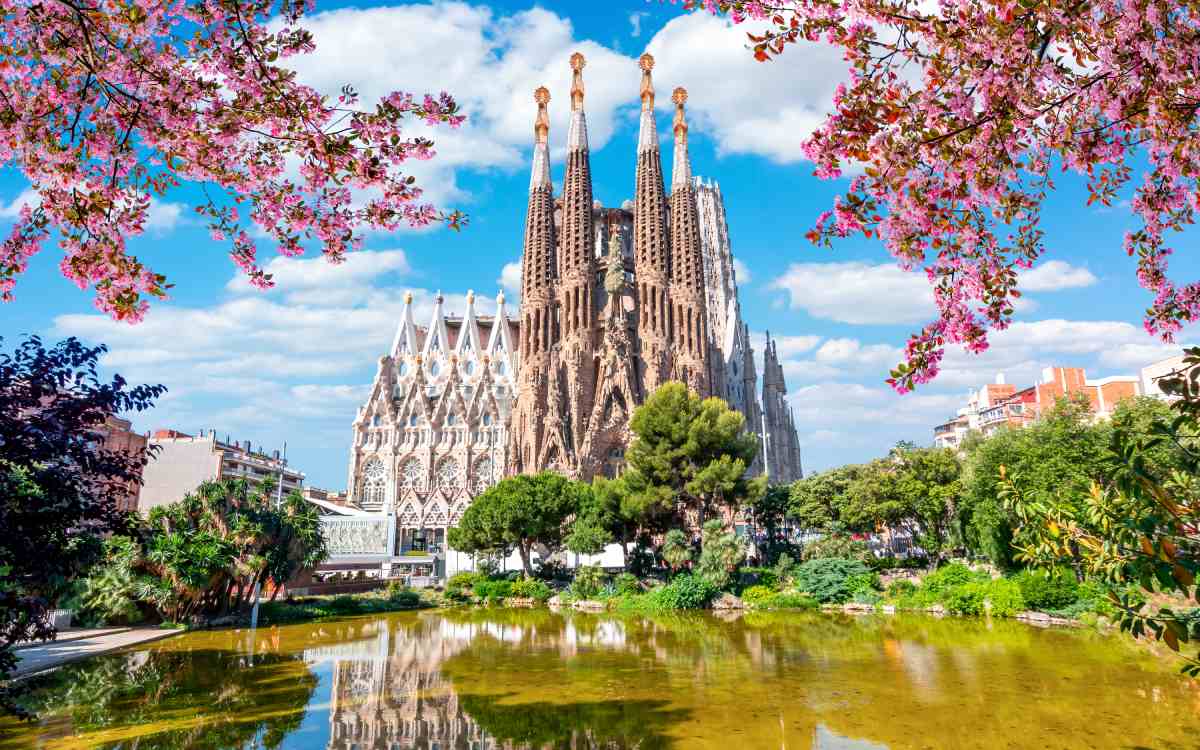
There is no doubt that the Sagrada Familia is Gaudí’s most famous building, but it is also one of the most visited monuments in the world. The architect began to work on it in 1882 and kept doing it until he died in 1926. This cathedral is mainly composed of a central vault, three towers, a central nave, and many galleries and windows. This crypt is home to its creator’s body. Besides, its exterior includes three façades that represent each stage of Jesus Christ’s life: Nativity, Passion, and Glory.
The construction works didn’t stop despite its creator’s death, following his construction plans and sketches. The building is still under construction at present. If there is something that stands out about the Sagrada Familia, it is the fact that it is an unfinished work.
Eusebio Güell or Gaudí’s patron: Park Güell, Palau Güell, and Colònia Güell
Gaudí and the Catalan industrial entrepreneur Eusebio Güell developed a strong friendship and a productive patronage. This relationship ended materialising in the form of some of Gaudí’s most popular works, such as the Park Güell, the Palau Güell, and the Colònia Güell.
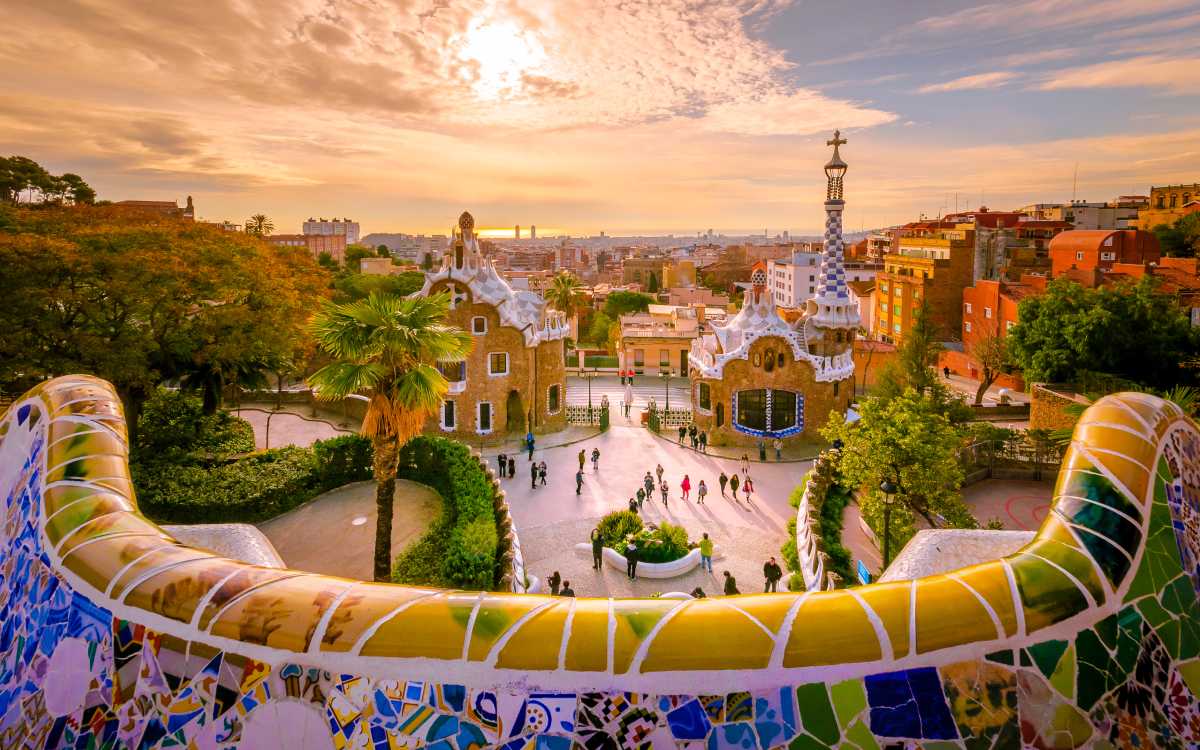
The Park Güell is the most famous of these three works. This public park sits in the district of Gràcia, but a ticket is required for entry. This complex was inaugurated in 1906, and it is known for the infinite mosaics and geometric shapes scattered throughout the area. You’ll be protected from the sun by the park’s many trees and bushes, while an artificial lake, fountains, and water canals cool down every corner. Here awaits you the Gaudí House Museum, where Gaudí lived for almost 20 years.
Works such as the Palau Güell combine different architectural styles, where Gaudí used Gothic and Renaissance elements. The palace was designed for Eusebio Güell between the years 1885 and 1889, with the aim of using it as a luxurious residence for the Güell family. But it never did.
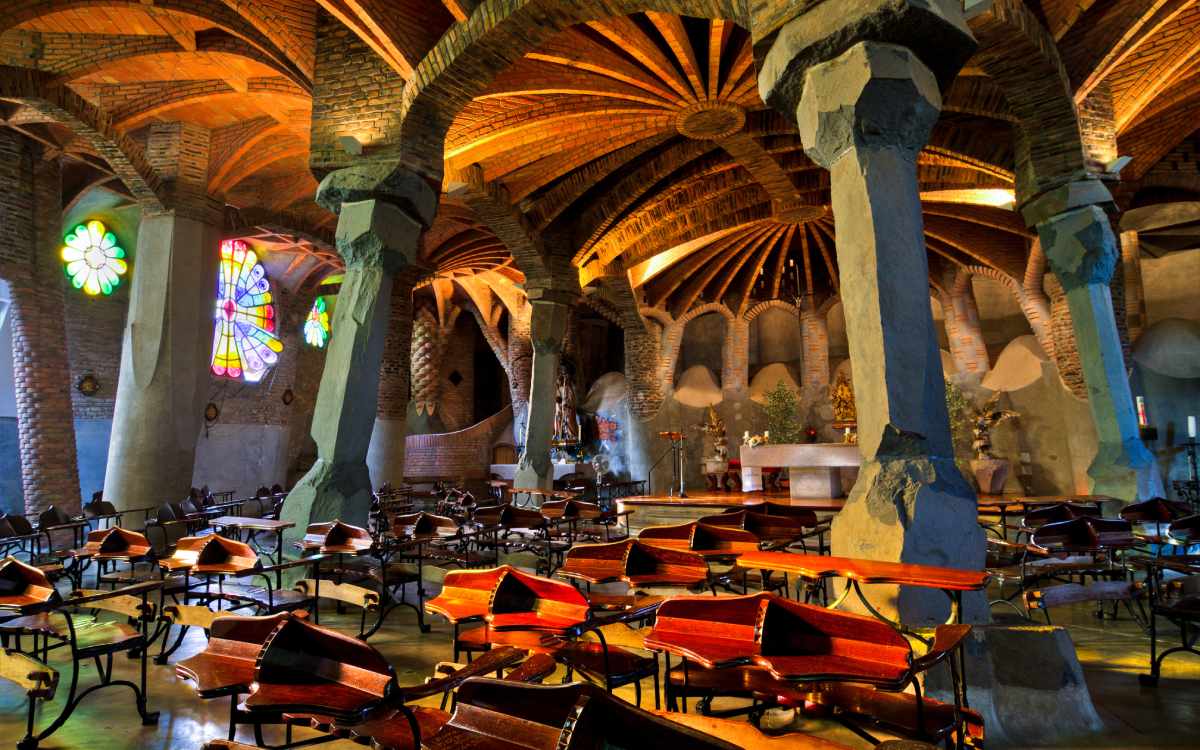
And last but not least, the Colònia Güell was built between 1898 and 1914. Founded by the Catalan patron, it was meant to host the workers of his cotton factory. Gaudí’s project included houses for these workers, a church and a factory. The Colònia Güell was declared a Bien de Interés Cultural by the Spanish Government and has been a UNESCO World Heritage Site since 2005. Here is Gaudí’s Crypt, a building for the architect to experiment with and explore innovations that he would later apply to the Sagrada Familia.
Gaudí’s houses: Casa Batlló, Casa Vicens and many others
By the late 19th century, Barcelona was a changing city in the midst of a fascinating urban development. A new social class appeared at this time: the industrial bourgeoisie. Meanwhile, the district of Eixample appeared and soon became a trendy neighborhood. This new bourgeoisie began to relocate to this area, and the local architecture turned into a symbol of social class.
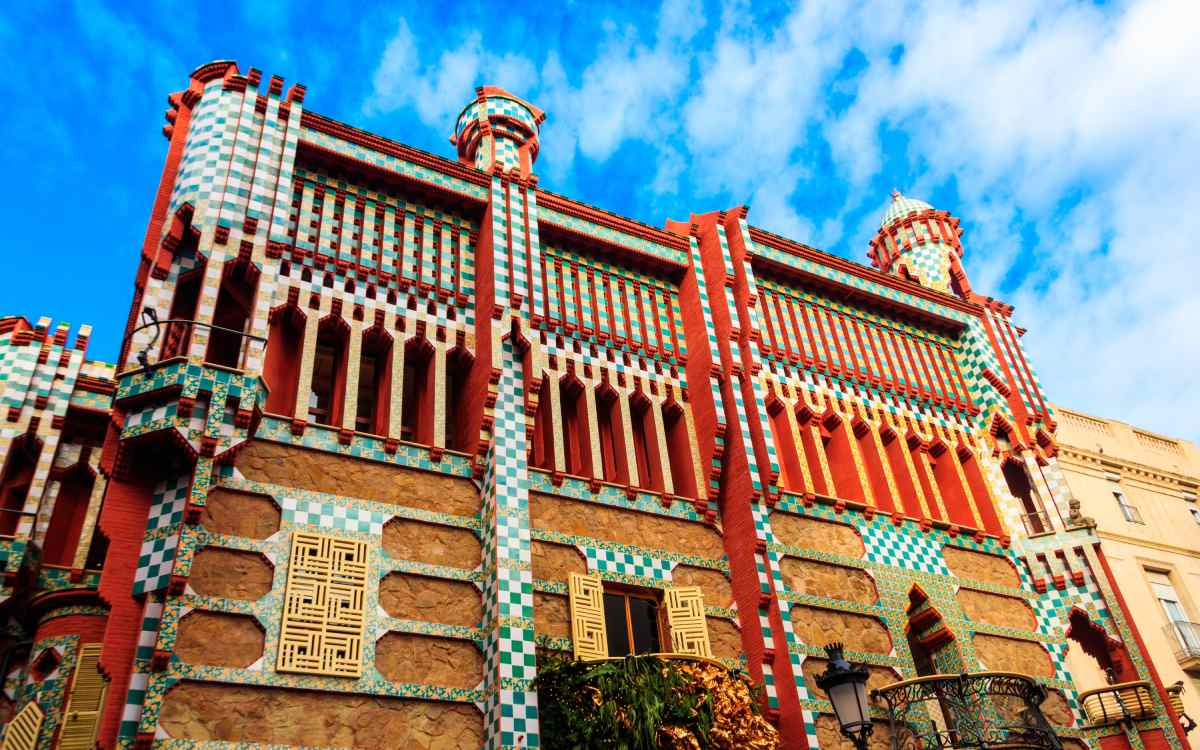
The many Modernist houses were built on an area disputed by the greatest architects of the moment. Of course, Gaudí was one of them. For this reason, if you walk along the Passeig de Gràcia, you will find four of these houses built by Gaudí: the Casa Calvet, the Casa Batlló, the Pedrera-Casa Milà, and the Casa Vicens.
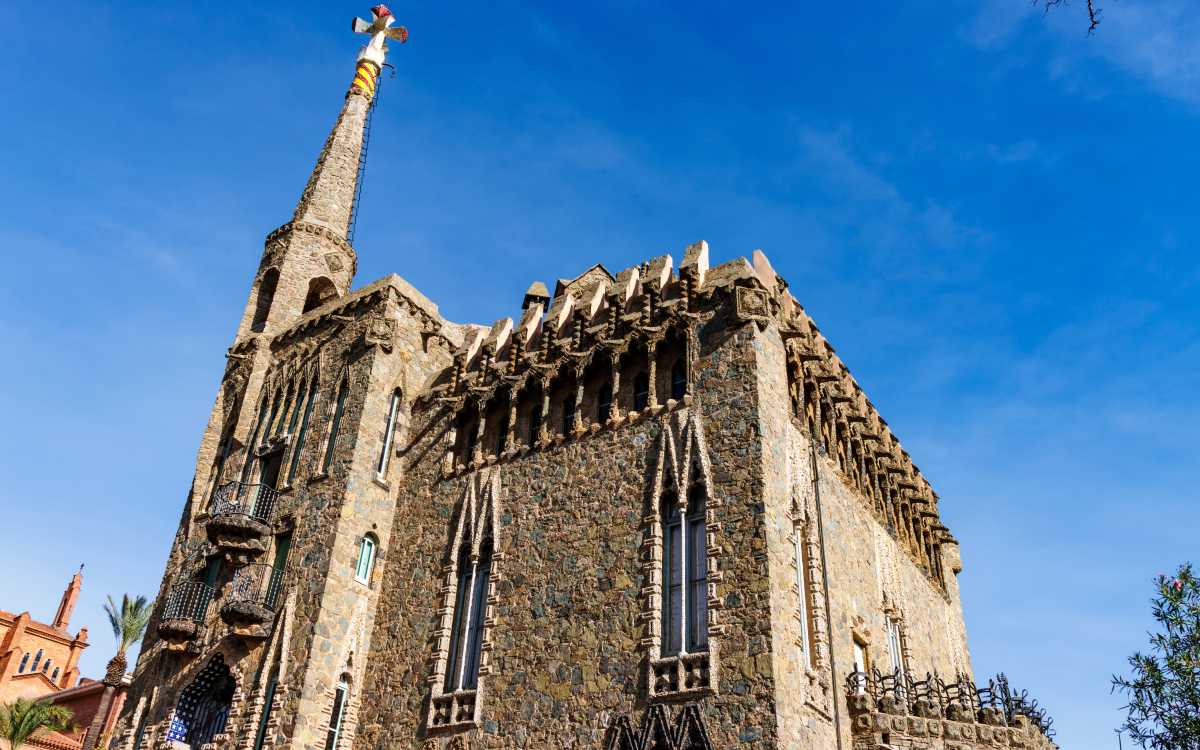
The Casa Figueras, more commonly known as Casa Figueras, isn’t as popular as the others. This building is inspired by a medieval castle that used to sit in this spot, so the house is further than the others, near the Ronda de Dalt on the foot of the Tibidabo. This is one of the artist’s most singular works.
Other works by Gaudí in Barcelona
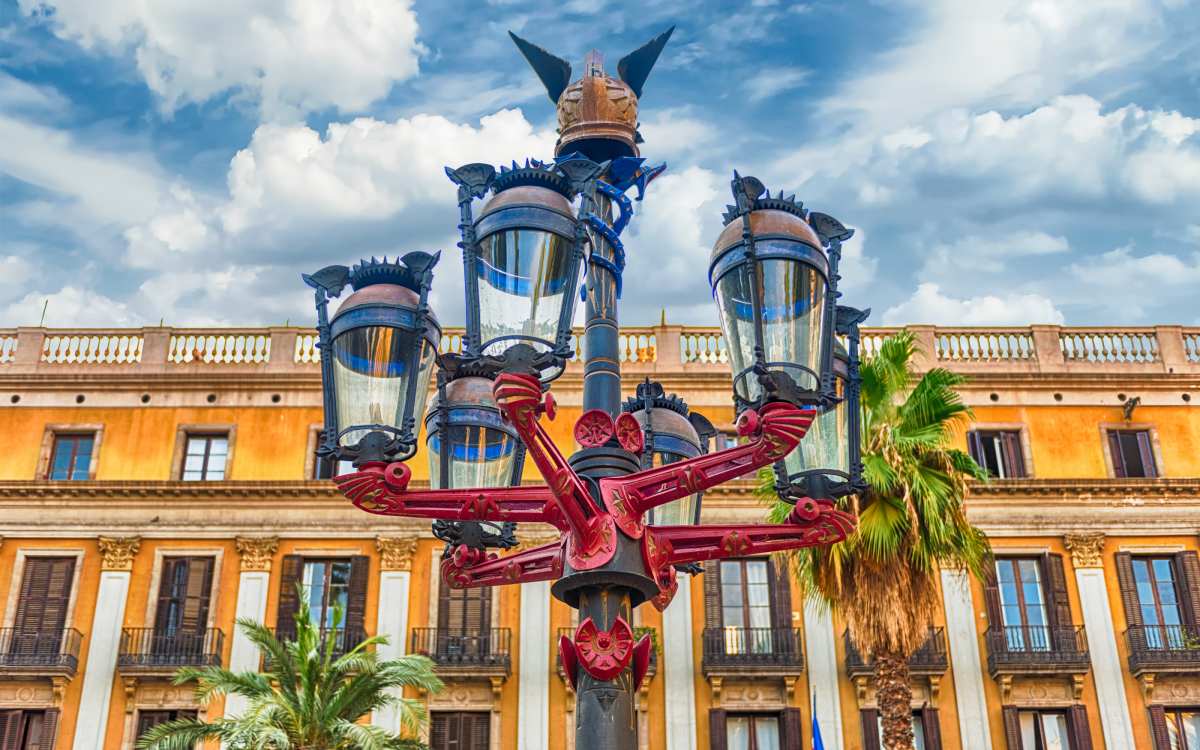
The places already mentioned are popular among those who know the architect’s production, except for the Bellesguard Tower. But Antoni Gaudí left many other treasures in smaller sizes than usual. Gaudí’s street lights for Plaza Real were designed by the architect, and they were his first important commission. The fountain of Hércules at the Royal Palace of Pedralbes, also known as Fuente Gaudí, was built in 1884.
He also left behind the Portal Millares. At first, Gaudí was hired to build a housing complex. However, the project was finally completed by the architect Doménec Sugranyes and received the name Casa Millares. Gaudí limited himself to building the entry portal and the perimeter wall.
His Colegio de las Teresianas de Barcelona is larger than the previous example but equally unknown. This building in the Sarrià-Sant Gervasi district was started by the priest San Enrique de Ossó. When the building was already 80 centimetres tall, the priest offered the project to Gaudí under one condition: he had to preserve the original sombre design. And he did.
Other projects in the province of Barcelona
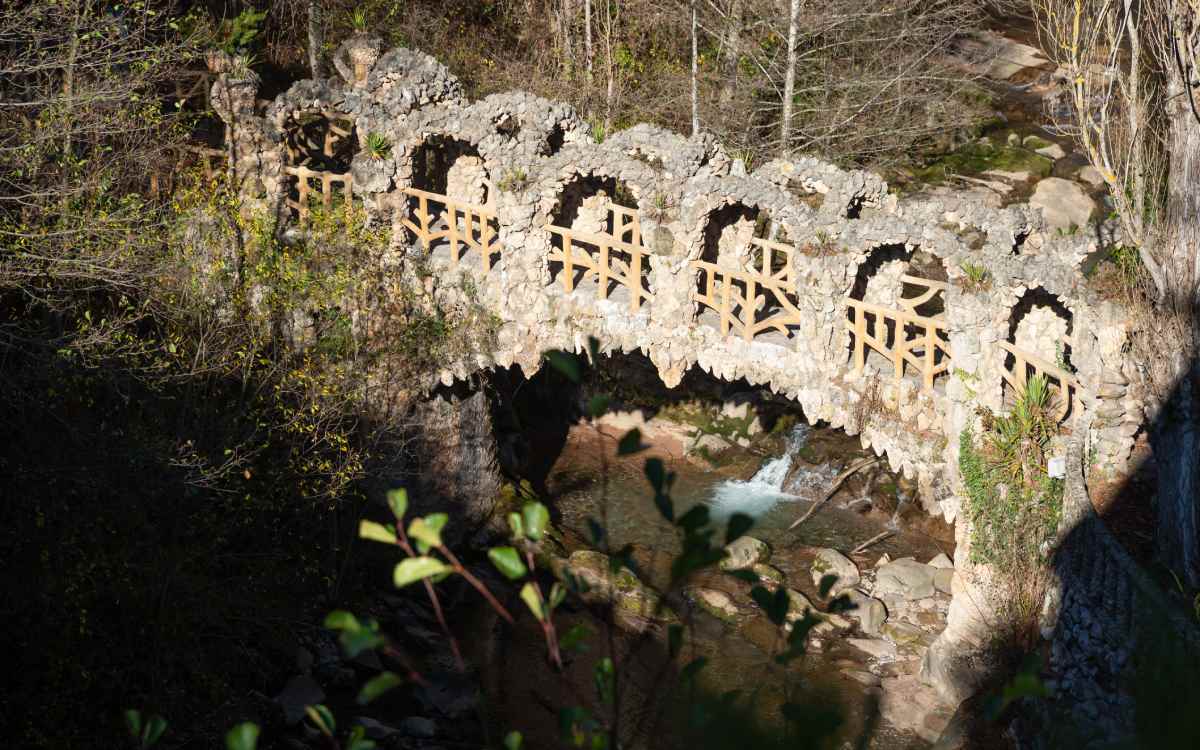
Most of Gaudí’s works sit in the capital of Cataluña, but he also took his talent to other spots in the province of Barcelona. The Xalet del Catllaràs and the Jardins Artiga are great examples, and they are linked to each other. The chalet is located in the municipality of La Pobla de Lillet and was commissioned by Eusebi Güell to host the miners that extracted rocks for the old Cemento Asland factory.
The Artigas accommodated the architect while he was working on the project. In order to thank the father for his hospitality, an important textile businessman, he built a garden for him, the Jardín Artigas. This venue could be Park Güell’s twin brother.
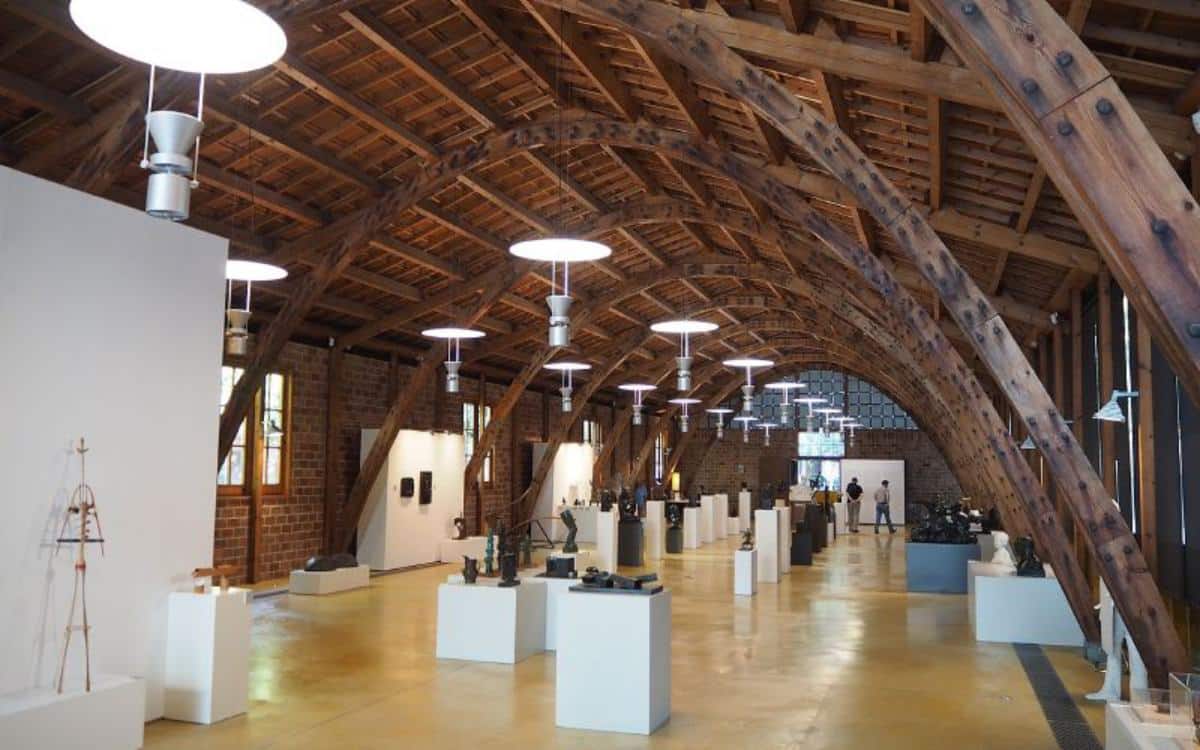
The Barcelonese artist also left his mark in another area of Barcelona: Mataró. He received the first big project here, the design of the Cooperativa Obrera Mataronense, whose Nau Gaudí is the only thing that remains. Nau Gaudí is probably the most modest and simple work by the architect.
The Bodegas Güell should be on this list of Gaudí’s works in Spain. This architectural complex sits in Sitges. As its name suggests, the project was commissioned by Eusebi Güell, who used a Neo-Gothic style this time.
Gaudí’s works outside of the city of Barcelona
The Capricho of Comillas
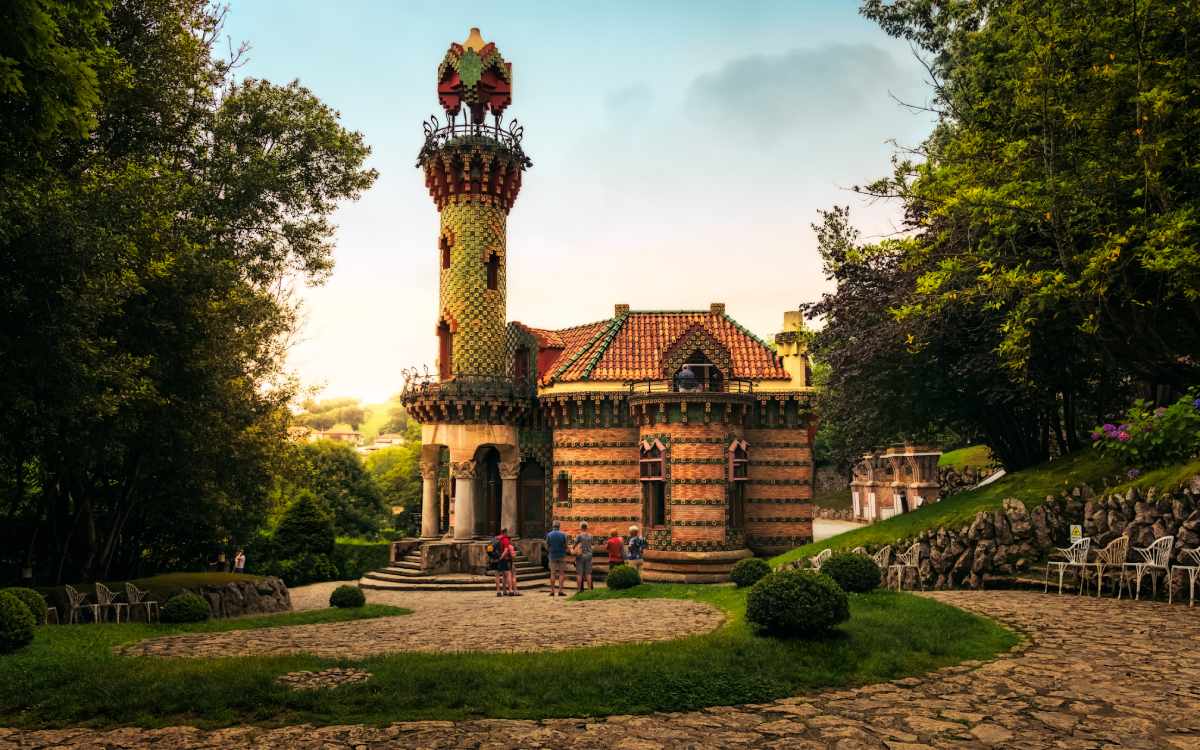
The Capricho de Gaudí awaits in the municipality of Comillas, in Cantabria. It was commissioned by the Indiano Máximo Díaz de Quijano and built between the years 1883 and 1885. This work belongs to the artist’s Orientalist era, when he combined a Modernist style with influences of Eastern cultures and elements of Moorish art. Gaudí materialised his view of an ideal house in this building, which is now a house museum, and merged the design with the environmental features and the patron’s likes.
The Episcopal Palace of Astorga
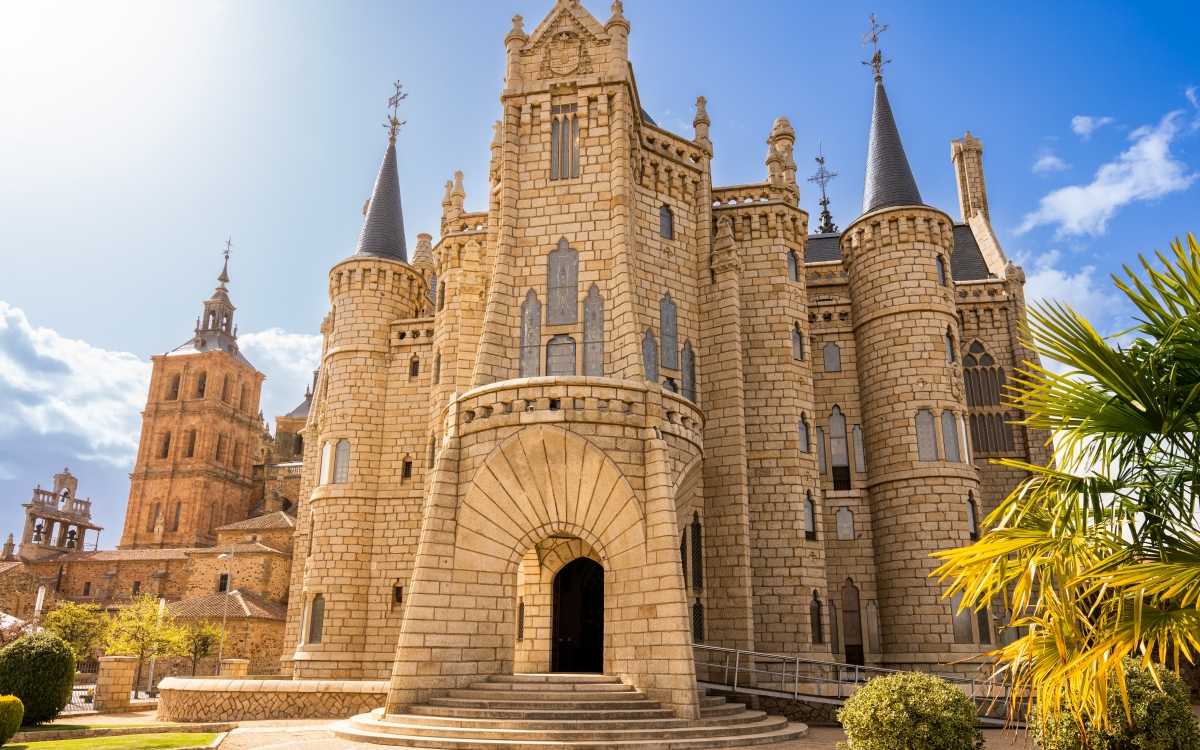
The Episcopal Palace of Astorga, also known as the Palacio de los Obispos, was built between 1889 and 1915. It was designed to host Astorga’s bishops and to be the headquarters of the cathedral it shares its name with. The building’s main façade is one of Gaudí’s masterpieces, a combination of Gothic, Neo-Gothic and Modernist elements.
The Casa Botines
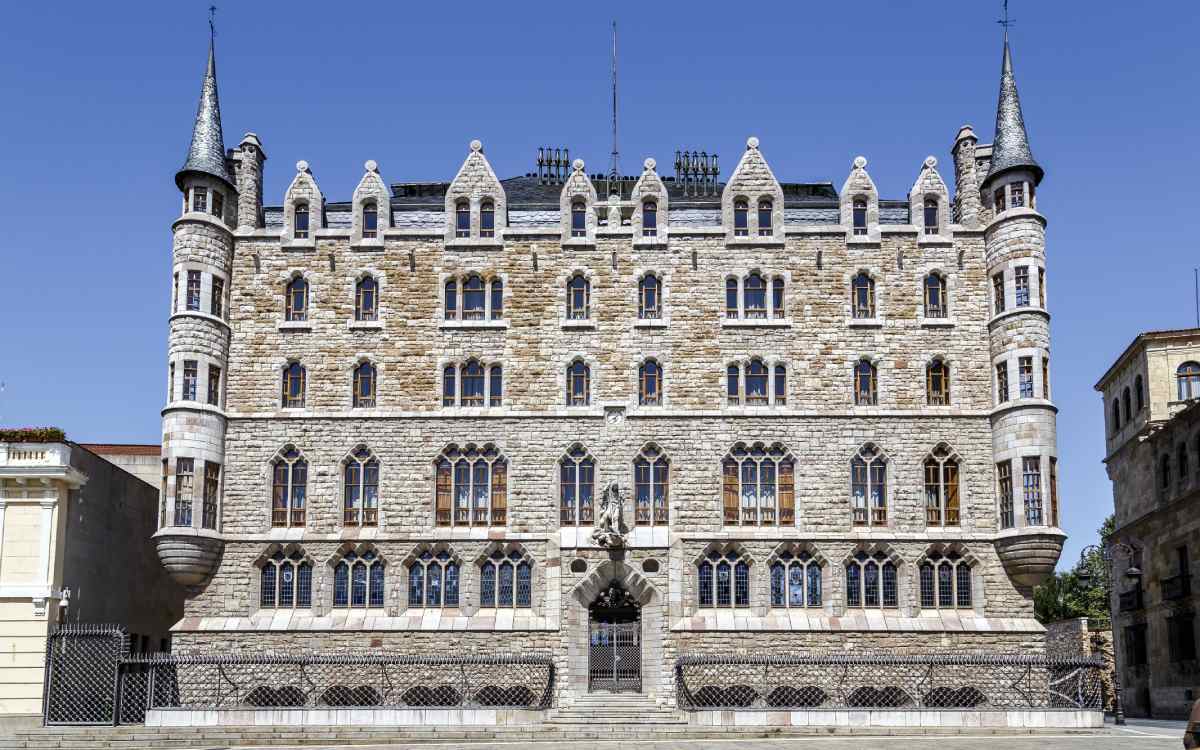
Before building the Casa Vicens and the Casa Batlló, Gaudí shaped his innovative ideas into a different housing complex: the Casa Botines. At first, this property was created so the businessmen Simón Fernández and Mariano Andrés could expand their business. They needed a building with storehouses and rental apartments for the bourgeois families. Gaudí built it for them.
The building was used for these purposes until 1929, when the Caja de Ahorros y Monte de Piedad de León bought it. In 2017, the Casa Botines was turned into a museum and opened to the general public. The house was declared a Historical Monument of Cultural Interest in 1969 and was restored in 1996.
The Catalan architect found the inspiration for designing this building in Gothic medieval art and combined it with his own style, a choice evident in his use of arches, columns, and decorative elements. The design of its balconies and the ornamentation of its façades give a special touch to the house. It also includes a wide number of decorative details, such as mosaics, ceramic panels, reliefs, and statues.
You can also read this article in Spanish here.
Follow us on Facebook!